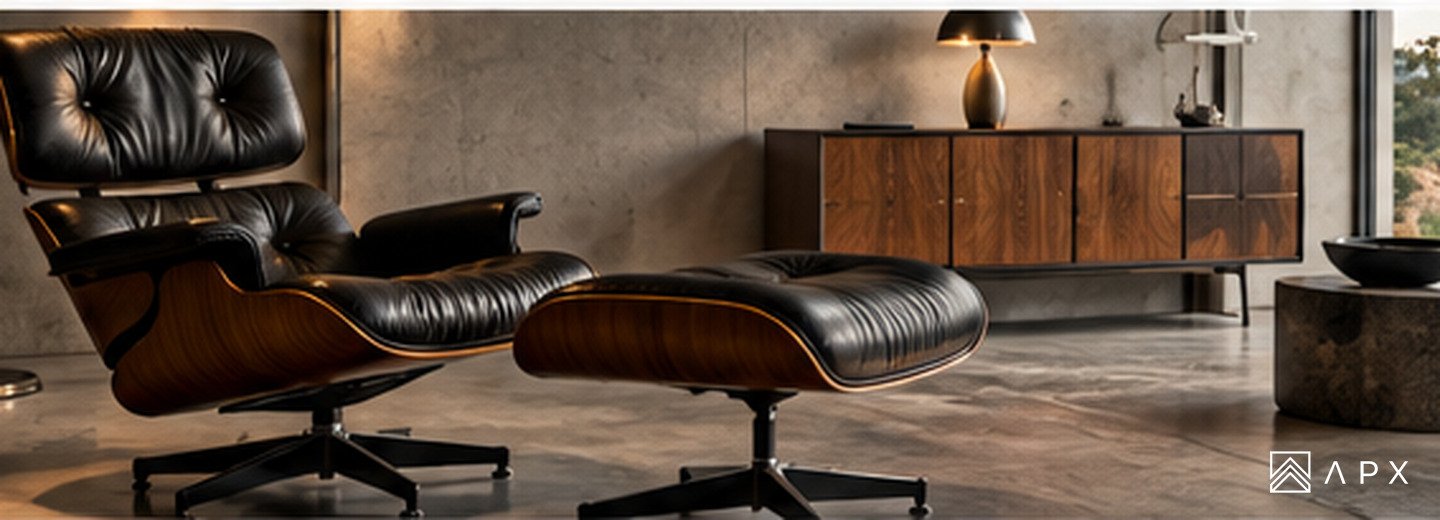
Jean Prouvé tables can carry $500k–$1m estimates. APX examines how provenance, original surfaces and design history drive collectible furniture values.
Executive Summary
Collectible design has blurred the boundary between furniture and art. Jean Prouvé tables have carried auction estimates of $500,000 to $1 million, while rare demountable houses, desks and institutional pieces can reach into seven-figure territory. The appeal is not simply decorative. At the top end, buyers are acquiring scarce examples of 20th-century architecture, engineering and design history.
This market rewards specificity. A famous designer's name is only the starting point. Model, production date, commissioning institution, original finish, dimensions, provenance and restoration all influence value. The difference between a later production example and a documented early institutional piece can be substantial.
Key Takeaways
- Sotheby’s has estimated important Jean Prouvé tables at $500,000–$700,000 and $700,000–$1 million.
- Collectible design sits across art, architecture and functional furniture, giving top pieces a broad buyer base.
- Institutional provenance can be particularly valuable because it helps document production history and authenticity.
- Aggressive refinishing can remove original surfaces and reduce historical value.
- Large or architectural pieces create meaningful logistics, installation and conservation costs.
Why Design Has Become a Trophy Category
The best 20th-century designers solved structural and manufacturing problems in ways that now read as sculptural. Prouvé's folded metal legs, Charlotte Perriand's integrated interiors and Jean Royère's distinctive forms are immediately recognisable. As scholarship and museum exhibitions have expanded, collectors increasingly view important furniture as part of the modern-art canon rather than as secondary decoration.
That shift has changed buying behaviour. A collector may now acquire a Prouvé table for the same room as a major painting, and auction houses routinely present design in curated sales alongside contemporary art.
What Determines Value?
Model rarity and production history
Some designs were produced widely; others were made for a specific school, factory or public project. Commission history and surviving population can be more important than visual similarity.
Original surface
Original paint, patina, hardware and timber can be highly valued. The instinct to make a vintage desk look new can destroy evidence of its age and manufacture. Conservation should therefore be planned with a design specialist, not a general furniture restorer.
Provenance
Institutional and collection provenance provide both historical context and authentication. Sotheby’s listings for important Prouvé pieces frequently trace original installations and later gallery ownership, reflecting how central provenance is to the category.
Is It an Investment or Functional Art?
High-end design can be used, but usage introduces risk. Scratches, UV exposure, water damage and structural stress can affect condition. Owners need to decide whether the object is part of daily life or a conserved collection and insure it accordingly.
Liquidity also differs by designer and geography. Prouvé, Perriand and Royère have established international followings, while lesser-known designers may rely on specialist galleries and specific regional demand. Auction records can be thin, making identical-looking comparables misleading.
Buying Strategy for a Serious Collection
A disciplined buyer should document model references, production dates and comparable examples before negotiating. Gallery asking prices can be useful context but should not be treated as auction evidence. When a piece has appeared publicly before, prior catalogue descriptions and condition photographs can reveal changes that are not obvious in a current sale.
For larger architectural works, ownership planning should start before acquisition. Door widths, floor loading, specialist crating, customs treatment and future deinstallation can all affect the real cost of holding the object.
APX Perspective
Collectible design is attractive because it combines daily visual relevance with genuine cultural significance. The strongest purchases are not simply expensive furniture; they are documented examples of influential design, ideally with original surfaces and credible provenance. For UHNW collectors, the due-diligence standard should be closer to art acquisition than interior decoration.
Frequently Asked Questions
Can collectible furniture still be used?
Yes, but owners should understand the condition risk. Heavy daily use may conflict with preserving an important original surface or rare structural components.
Why is provenance so important for design?
Many models were reproduced across years and workshops. Provenance can help identify production period, original commission and authenticity.
Does restoration always reduce value?
No. Sensitive conservation can preserve an object, but undocumented refinishing, replacement parts or altered dimensions can materially affect collectability.
Related APX Intelligence
Sources & Further Reading
APX Intelligence is provided for general information only and does not constitute investment, legal, tax or financial advice. Collectibles and alternative assets can be illiquid, difficult to value and subject to material transaction, storage, insurance and authenticity risk.