
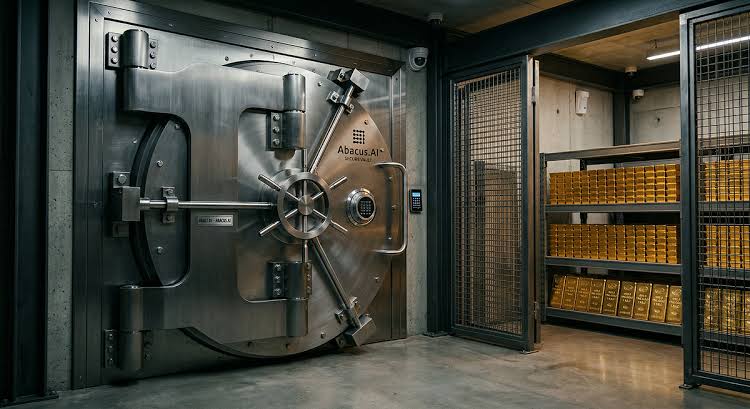
Best Offshore Private Vaults: Institutional Comparison, Security Architecture, and Cost Breakdown
An institutional investigation into non-bank high-security storage across Zurich, Singapore, London, and Vaduz—evaluating physical protection, legal custody models, freeports, and fee mechanics.
Executive Summary
Securing high-value physical assets—precious metals, fine art, rare gems, and physical bearer certificates—requires moving beyond traditional commercial bank safe deposit boxes toward independent, non-bank offshore private vaults. Bank vaults face systemic vulnerabilities, including bail-in risk, automatic CRS financial information exchange, regulatory asset freezes, and operating hour constraints. Independent offshore vault facilities across primary wealth jurisdictions (Zurich, Singapore, London, Vaduz) offer Class 3/UL-certified physical security, segregated unallocated/allocated bailment, air-gapped data architecture, and duty-free Freeport logistics. Annual custody pricing ranges from 0.12% to 0.50% basis points for allocated bullion or $1,500 to $15,000+ per annum for private safe deposit lockers, backed by Lloyds or Willis Towers Watson Lloyd's-underwritten insurance.
Key Takeaways
- Non-Bank Separation: Private vaults operate outside the commercial banking system, insulating physical assets from bank bail-ins, systemic insolvency, and banking holiday lockdowns.
- Legal Custody (Bailment): Assets held in allocated non-bank storage remain the direct legal title property of the depositor, entirely off the vault operator's balance sheet.
- Freeport Tax Neutrality: Facilities located within specialized customs zones (e.g., Le FreePort Singapore, Geneva Freeport) defer or eliminate import VAT, sales tax, and customs duties on fine art and bullion.
- Cost Drivers: Private box rentals range from $1,200 to $15,000+ per year, while segregated bullion custody is priced as a percentage of asset value (0.12% to 0.35% per annum including insurance).
- Jurisdictional Defense: Switzerland and Liechtenstein provide superior constitutional asset protection, sovereign stability, and legal independence from EU/US extraterritorial overreach.
1. Introduction: The Death of the Bank Safe Deposit Box
For over a century, ultra-high-net-worth (UHNW) families and family offices relied on commercial bank safe deposit boxes as the default sanctuary for physical wealth protection. Today, that model is obsolete. Major retail and private banking institutions globally—including UBS, HSBC, Barclays, and JPMorgan—have systematically closed their safe deposit box operations or imposed drastic operational restrictions.
The retreat of commercial banks from physical safe custody stems from heightened regulatory compliance costs, capital adequacy directives under Basel III/IV, and liability exposure. More critically, sophisticated wealth principals have recognized that storing physical assets inside a commercial bank creates unacceptable counterparty risk.
As sovereign debt levels escalate and geopolitical tensions fracture international financial systems, private wealth capital is migrating toward independent, non-bank offshore private vaults. These facilities offer militarized physical security, legal bailment protections, tax-neutral Freeport zones, and absolute insulation from banking sector insolvency.
2. Why Non-Bank Private Vaults Are Imperative for UHNW Families
Storing high-value tangible assets—such as physical gold bullion, rare diamonds, fine art, historical family heirlooms, or offline cryptocurrency cold-storage wallets—inside the commercial banking system exposes wealth to distinct legal and financial risks:
- Bail-In & Solvency Risks: During a banking crisis, monetary authorities can freeze bank operations or declare "bank holidays." Under modern bank resolution laws (such as the EU Bank Recovery and Resolution Directive), bank depositors and safe custody clients risk physical access denial or legal entanglements if a bank enters receivership.
- Regulatory Reporting & CRS Scope: Financial bank accounts are subject to automatic reporting under the OECD Common Reporting Standard (CRS) and FATCA. While non-bank physical vault storage of tangible property is generally non-reportable under monetary financial account rules, storing bullion inside a bank account wrapper triggers automatic financial reporting.
- Restrictive Operational Access: Bank safe deposit boxes are restricted to standard banking operating hours and localized branch access. In contrast, institutional non-bank facilities offer 24/7/365 appointment access, private viewing suites, secure transit bays, and air-gapped armory protocols.
- Legal Title (Bailment) vs. Bank Liability: In a non-bank private vault, stored items are legally held under strict bailment law. The vault operator acts merely as a bailee (custodian); the depositor retains 100% legal title. Assets never appear on the vault operator's balance sheet and cannot be seized by creditors of the facility.
3. Global Offshore Vault Hubs: Zurich, Singapore, London, Vaduz
Selecting an offshore vault requires evaluating jurisdictional stability, legal defense, rule of law, and geopolitical neutrality. Four premier global jurisdictions dominate the institutional non-bank vault landscape:
Switzerland (Zurich & Geneva)
Switzerland remains the undisputed global leader in private asset protection. Swiss law enforces ironclad constitutional property rights and non-EU sovereign independence. Facilities in Zurich and Geneva provide world-class bullion storage, specialized art freeports, and centuries of custodial tradition.
Singapore (Le FreePort & Jurong)
Singapore is the premier Asian haven for physical wealth protection. Supported by a robust legal framework, strict property laws, and zero Goods and Services Tax (GST) on Investment-Grade Precious Metals (IPM), Singapore's flagship facility—Le FreePort (often called the "Fort Knox of Asia")—offers ultra-high-security vaulting adjacent to Changi Airport.
Liechtenstein (Vaduz)
Liechtenstein combines sovereign principality stability with robust asset protection trust laws. Operating outside the EU while maintaining a currency union with Switzerland, Vaduz boasts several elite non-bank vault providers specialized in ultra-discreet, long-term wealth preservation.
United Kingdom (London)
While subject to UK tax compliance, London remains the global epicenter for precious metal liquidity and physical trade settling via the London Bullion Market Association (LBMA). Independent vaults in Mayfair and the City offer immediate access to deep international bullion clearing.
4. Institutional Comparison Matrix: Premier Offshore Facilities
The table below provides an institutional audit of leading independent non-bank vault operators across key primary jurisdictions:
| Facility & Location | Jurisdiction Profile | Core Specialty & Access Mechanics | Primary Insurance & Security Rating |
|---|---|---|---|
| Das Schweizer Das Safe / Liemeta Vaduz, Liechtenstein |
Sovereign Principality (Non-EU) | Ultra-private safe deposit lockers, allocated bullion, 24/7 private viewing rooms. | Underwritten by Lloyd's of London; Class 3/UL-608 high-security rated. |
| Le FreePort / Silver Bullion (The Reserve) Singapore |
Asia Premier Hub (Tax-Neutral IPM) | Freeport tax-free art & fine wine, massive segregated bullion vaults, automated robotic safe deposit boxes. | Underwritten by Willis Towers Watson & Lloyd's; seismic-reinforced, Class 3 vaults. |
| Swiss Gold Safe / Degussa Zurich & Lucerne, Switzerland |
Swiss Sovereign Neutrality | Segregated non-bank precious metal custody, personal safety deposit boxes, non-CRS reportable physical storage. | Full comprehensive insurance via Lloyd's of London; biometric dual-key access. |
| IBV International Vaults / Metropolitan Safe Deposits London, UK |
Global Liquidity Center | Luxury private safety deposit lockers, private car transportation, high-value bullion and jewelry storage. | Multi-tier insurance policies up to £500,000+ per box; Grade 10 explosive-proof vaults. |
5. Fee Structures & Cost Mechanics Breakdown
Pricing for offshore non-bank vault storage operates under two distinct commercial fee structures: Fixed Box Rentals (Safe Deposit Lockers) and Ad Valorem Custody Fees (Allocated Bullion/Art).
1. Private Safety Deposit Box Costs (Lockers)
Box rental fees are billed annually and determined by total volume (box dimensions) and requested base insurance limits:
| Box Size Classification | Approximate Dimensions (H x W x D) | Average Annual Fee Range (USD / CHF) | Included Base Insurance Cover |
|---|---|---|---|
| Small (Documents / Jewelry) | 50mm x 300mm x 450mm | $1,200 – $2,200 / year | $25,000 – $50,000 baseline cover. |
| Medium (Bullion / Multiple Watches) | 150mm x 300mm x 450mm | $2,500 – $4,800 / year | $100,000 baseline cover. |
| Large (Heavy Bullion Bars / Artwork) | 300mm x 300mm x 450mm | $5,000 – $9,500 / year | $250,000 baseline cover. |
| Custom Walk-in Safe / Armory Suite | Custom Room Dimensions | $15,000 – $60,000+ / year | Bespoke Lloyd's policy ($1M – $50M+). |
2. Allocated Precious Metal & Art Custody Costs (Ad Valorem)
When storing loose gold bars, silver, or fine art outside a locker, providers charge an annual fee calculated as a percentage of total market value (billed quarterly):
- Gold Bullion Custody: 0.12% to 0.35% per annum of asset market value (includes full insurance).
- Silver & Platinum Custody: 0.35% to 0.65% per annum (higher due to physical volume and weight constraints).
- Fine Art & High-Value Collectibles: 0.40% to 0.75% per annum (includes climate-controlled environmental storage and specialized art handling).
6. Physical Security, ISO Standards & Insurance Underwriting
An institutional private vault must possess physical and electronic security engineering capable of defeating sustained intrusion attempts, thermal cutters, and explosive breaches.
Physical & Environmental Engineering Standards
- UL-608 & EN 1143-1 Class 3 Ratings: Vault walls built with steel-fiber reinforced ultra-high-performance concrete (UHPC), engineered to resist drill, diamond-core, and explosive attacks.
- Dual-Key & Biometric Access Controls: Opening a private locker requires two physical keys present simultaneously—one held exclusively by the client, the other by the vault master—ensuring vault staff can never access client boxes independently.
- Climate & Environmental Monitoring: For art and physical certificates, climate-controlled environments maintaining 50% relative humidity (±5%) and constant 18°C temperature are mandatory.
Insurance Underwriting & Lloyd's Policies
Physical security is meaningless without comprehensive, primary insurance underwriting. Institutional vaults must hold primary risk policies underwritten directly by major syndicates—primarily Lloyd's of London or Willis Towers Watson.
Family offices must verify that the policy covers all-risk physical loss or damage, including internal theft, armed robbery, natural disasters, and terrorism, with zero deductible (excess) passed to the client.
7. Fiduciary Due Diligence Checklist for Vault Selection
Before committing assets to an offshore vault facility, single-family offices and corporate counsel should complete the following eight-point audit:
| Audit Domain | Verification Requirement | Red Flag / Disqualification Trigger |
|---|---|---|
| Bank Independence | Confirm facility is 100% privately owned with zero bank debt or bank parentage. | Facility owned by or dependent on a retail banking institution. |
| Legal Custody (Bailment) | Written contract confirming bailment law applies; assets remain direct title property. | Contracts referencing "unallocated" storage or general pool assets. |
| Insurance Certificate | Direct Certificate of Insurance from Lloyd's showing active policy numbers and limits. | Refusal to show full policy terms or self-insured arrangements. |
| Auditing & Inspection | Right to physically inspect allocated assets or receive independent Big-Four audit reports. | Restrictions preventing physical client inspection of stored items. |
8. Frequently Asked Questions
Q: Why are non-bank private vaults preferred over traditional bank safe deposit boxes?
A: Non-bank private vaults operate outside the banking system, meaning stored physical assets are not balance-sheet liabilities and are completely insulated from banking bail-ins, systemic liquidity freezes, or holiday lockdowns. Furthermore, non-bank physical storage is generally outside the scope of Automatic Exchange of Information (AEOI/CRS) reporting regimes, which focus on financial/monetary bank accounts.
Q: How much does it cost to store assets in an offshore private vault?
A: Pricing follows two models: Safety Deposit Boxes (lockers) cost between $1,200 and $15,000+ per year based on box dimensions and insurance limits. Allocated Custody (precious metals/art) is billed as a percentage of asset value, typically ranging from 0.12% to 0.35% per annum for bullion and 0.40% to 0.65% for fine art, inclusive of primary insurance.
Q: Which jurisdiction offers the best offshore asset protection for physical vault storage?
A: Switzerland (Zurich/Geneva) and Liechtenstein (Vaduz) offer the strongest legal defenses due to strict constitutional property rights, political neutrality, and non-EU independence. Singapore (Le FreePort) represents the premier Asian hub due to its ultra-secure infrastructure, zero GST on investment-grade metals, and robust rule of law.
9. Institutional Glossary
- Non-Bank Private Vault
- A high-security physical storage facility operated independently of commercial banks and monetary authorities, avoiding banking counterparty risk and financial bail-in liabilities.
- Allocated & Segregated Custody
- A legal custody model where a client's specific physical assets (e.g., serialized gold bars or artwork) are physically separated, individually identified, and held as direct personal property under bailment law.
- Freeport Facility
- A specialized duty-free customs zone where high-value physical goods can be legally imported, stored, and traded without triggering immediate customs duties, sales tax, or VAT.
- Class 3 / UL-608 Vault Standard
- The highest industrial security ratings for vault doors and reinforced enclosures, engineered to withstand concentrated physical, thermal, and explosive penetration attacks.
- Bailment Law
- The legal doctrine establishing that stored property remains the sole title property of the depositor and cannot be seized by creditors or liquidators of the vault company.
10. Institutional Verification & Statutory References
For family office advisors, legal fiduciaries, and private clients, physical vault storage and international asset protection should be verified against recognized statutory benchmarks:
| Governance Dimension | Governing Agency / Professional Standard | Primary Standard & Verification Protocol |
|---|---|---|
| Vault Physical Security | Underwriters Laboratories (UL) / European Standards (EN) | UL-608 Standard for Burglary-Resistant Vault Doors & EN 1143-1 Grade III-VI. |
| Precious Metals & Bullion Standards | London Bullion Market Association (LBMA) | LBMA Good Delivery Standard (Serialized bar certification & chain of custody). |
| Insurance Underwriting | Lloyd's Market Association (LMA) / Willis Towers Watson | Specie & Fine Art Primary Insurance Policy Rules (All-risk, zero-deductible cover). |
11. The APX Perspective
At APX, we view non-bank offshore vault storage as a critical structural hedge against global monetary degradation, financial bail-ins, and systemic counterparty risk.
True physical wealth protection requires decoupling high-value assets from the commercial banking sector. By establishing allocated, segregated bailment structures within premier non-bank facilities across Switzerland, Singapore, and Liechtenstein, family offices insulate capital from banking crises and regulatory overreach.
Combining militarized Class 3 physical engineering, Lloyd's specie insurance, and Freeport tax neutrality creates long-term asset defense for intergenerational wealth.


